Monday, July 23, 2012

I trust…


‘We trust you’ is a great feeling. Hearing it from your loved ones fills you with energy; hearing it from friends makes you feel responsible and hearing it from parents takes you to enjoy the moment of highest contentment in the world.

Directly or indirectly, each and every one of us is busy in an effort of gaining trust. To make new friends, to strengthen the bonding, to gain respect, to earn money – the first and foremost capital investment is trust. It gives us new relationship; adds new people to our life. Trust is plinth, it’s the basic pillar; and just like a plinth or a pillar, it remains hidden and unnoticed all the time while playing the most important role.

‘Someone trusts me’ is greater feeling. It is the trust they have in me as a result of which staying away from my parents since last five years was never like living away from them for me. It’s this trust that keeps me reminding about my responsibilities. The trust makes me think righteously and select the right way from the countless options. It empowers me to say no, makes me wise enough to set and strong enough to pursue a goal. It tells me where to pause, where to speak and where to raise an alarm. Because somebody believes in me, it becomes my responsibility to keep the belief intact.

‘I trust someone’ is even greater feeling. It gives me a sense of security. Yes. Someone will come and support, someone will stand firm behind me in any situation is a moral boosting potion. Having someone trustworthy is like having another parallel life or a talisman with you. Lucky are those who have many such talismans around. I have selected some and happy with them. It’s really a difficult task to find out such talismans out of a crowd of friends and relatives. Well, what is easy then?

‘I trust myself’ is the greatest feeling. If I know what I am doing and what I can do, then I need not to worry about any other thing. But, it takes lives to realize, actualize the self. Those who achieve the stage of self-actualization become icons. For this, one Prince Siddhartha forsakes his palace pleasures one fine day and sits for the penance under a tree in deep forest. For this, Narayan Suryaji Thosar runs away from his own marriage function. For this, Narendranath Dutt keeps asking every wise man the only question – whether you have seen the god? For this, Debuji Janorkar leaves his family and farms, and starts walking all the way where his feet take. Leaving so many things for self-search is not easy. Well, what’s easy then?

Thousands of devotees walk tirelessly for weeks together to reach Pandharpur every year. This tradition is more than 1000 years old now. Devotees of Vithoba in Varkari tradition find the almighty in their respective work, and this makes them saints. Yes. The simplest way is to trust God.

That is why, ultimately, Narayan Suryaji Thosar’s search ends in finding Shri Ram as his deity and it makes him Samarth Ramdas. Narendranath Dutt’s search ends in finding Guru as his God and it makes him Swami Vivekananda. Debuji Janorkar’s search ends in finding ‘Gopala Gopala Devaki Nandan Gopala’ as his Mantra and it makes him Sant Gadgebaba. Ultimately, Prince Siddharth’s search ends in finding a light of wisdom within as his guide, and it makes him Buddha.

‘I trust God’ becomes greater than greatest feeling – Super superior to all.

Sunday, July 1, 2012

Rain again!


He is not as punctual as Sun, which appears on the eastern sky every time to bring a new day for us. He is not as gentle as the first breeze of winter that comes in mid-October with a joy of harvesting festivals. He is not as silent as the moon, which keeps growing and slowing quietly over the year. He is like a spoiled child who loves to play the game of hide and seek. He keeps everyone waiting for him for long. He likes to see the frightened faces, anxious eyes and exhausted bodies. Hidden somewhere around, he enjoys watching people’s requests turning into prayers and ultimately prayers into curses, for bringing him out. After worrying, annoying and angering his mother Earth a lot, he comes out at once. And all anger, annoyance and worries just disappear. He is rain. He may come late, irregular, unstable, and unequal; but when he comes, he rules.
Just the first spell of the real monsoon not more than half and hour and the three-month long irritating humidity, etching heat and sweltering atmosphere disappears! Rain has this magic with him. It changes the earth within minutes. Yes, he may be spoiled, but he must be the most beloved child of Mother Earth. Who else can bring the sudden change in mother otherwise?

Rain knows no silence. He appears with a bang and band of cracking clouds and the lightning. He changes breeze into wind and wind into storm to uproot the strongest ever trees. He wants everyone to stop and give him his due attention. He makes it sure by holding the life standstill. He breaks to make it new, crushes to give new shape, kills to start different journey, and destroys to instill new life. Rain has his own way to handle the things. After all, he is a spoiled child, but not an irresponsible one.

Rain overpowers the punctual Sun and fills the atmosphere with the dark at any time of a day. Even if being the darkness, it is full of bright rays of hopes. These rays can be seen, felt and enjoyed. These rays have every aspect of life within them. For children, they become joyride of paper pinnaces; for lovers, a walk under a single umbrella; for elders a joiner of heaven and earth.

Once angry, dark, and destructive; the rain appears life-giver, lovely and creative on the other way. Starting with the darkness, he ultimately shares light of life. Rain receives prayers, as well as curses. He pleases children as well as the elders. He is playful and He is serious. He comes and damages a little, but if He refuses to come, the damage is immense.

Rain is just like Krishna. Named as ‘Ghanashyama’, Krishna also comes throught dark. By stealing the curd and butter from their earthern pots, he irritates the Gopis; while by distributing it into his friends, he pleases the children. As a ‘Chitchor’ of Vrindavan, he redefines the love for the whole humanity. He acts as a destroyer to kill many demons, and becomes a ruler of hearts. Like rain, Krishna also receives praise and prayers with a smile; and curses, too, with the same smile. Ultimately by sharing the greatest wisdom of human life, he becomes the joiner of Heaven and the Earth.

Finally, through ‘Mahabharata’, the ultimate war, Krishna safeguards the moral values and frees the earth from the immoral forces. Rain, too, one day, is scheduled to play this role during the ultimate distruction --  ‘Pralay’.

We worship Krishna.
We worship rain. 

Tuesday, June 26, 2012

In dreams


I saw her in dream today.

She looked more beautiful – than she used to be; much matured – for the first time; quite serious – a rare sight; and very hypocritical – to my disappointment. But this change, I guess, was natural. In fact, it had to be there. It added grace to her personality. This was what being matured with time.

After all, she was no more a free flying, college going, and loud laughing girl. She was no more a naïve who used to run after butterflies, fall for the chocolates, and speak with the soft toys. She was not the same crazy who used to collect useless things like chocolate wrappers, gift packs, and stickers. She was changed, of course, for the larger good. She was changed completely, even in my dreams.

And Why not, when the change being the only constant thing? We all change with time. She shoulders a responsibility now. She has a special status. She represents not one, but two families now. It may appear to me that she is wearing a mask; and behind this mask of status, responsibilities and representation, she must be the same innocent, free flying, round eyed girl. But, I may be wrong. She might have changed from within. If it is so, then where is the girl who used to talk endlessly, laugh openly and sing the nursery rhymes along with the kids sweetly? She must have lost. Yes. The girl in my dreams, even if being the same, was not the same. She was not the one for whom I used to write poems.

This thought took me ages back. Krishna was the same, in fact more graceful, with the royal ornaments glittering on his impressively developed persona. But, Radha, now a tired, middle-aged woman, failed to recognize him. A strong Krishna – who punched and kicked demonic Kansa to death; an educated Krishna – well-learned from Maharshi Sandeepani Ashram; the royal Krishna – a newly crowned administrator of Mathura was not her Krishna. Her Krishna was a little one with a delicate peacock feather tucked in his curly hair, a small kid adorn with forest flowers and running behind cows, a mischievous boy who used to run away with the curd and butter. The change in Krishna was for the good of the entire universe, but Radha, who loved him the most, rejected the Krishna coming from Mathura and she preferred to be with the Krishna of Gokul in her memoirs.

I realized that I have to dream again. Dream again to search the persona in my memoirs. After all, the Krishna I want to meet in dreams is lost. And the lost Krishna lives only in memoirs. 

Sunday, June 17, 2012

She is ‘Swamini’; not ‘Dasi’ – my culture says

Activists turn quite aggressive while expressing their views on the national television; probably to make the optimum use of the rare opportunity to create impact and gain support from larger part of public opinion, of course for their noble cause. However, sometimes, while criticizing some social psychology or lacuna, they generalize the whole thing and target the innocent part of social make-up.
While holding the male-dominance in Indian society responsible for the domestic violence, senior social activist Kamla Bhasin, in sensationally popular ‘Satyamev Jayate’ said that in India, women call their husband as ‘Pati’ or ‘Swami’ which ultimately reflects a Master-servant relationship between the two. As women are considered as servants in this culture, they fall victims to the domestic violence, she said. She also mentioned the festivals like Rakshabandhan, in which sisters tie Rakhis to brothers and ask protection in return. Bhasin said, the brother may be younger or weaker to protect the sister; or sister may be elder and capable to protect her as well as her younger brother; but still, this Rakshabandhan practice is common in every Indian house.  This results in developing a superiority complex in boys and ultimately promotes domestic violence. Bhasin asked for equality; share in parent’s property and modern look out in males to change the scene. Her speech was studied, balanced and remedies she suggested appear quite effective.
Domestic violence, I think, is the psychological disorder. A real gentleman can never even think of attacking his wife or younger sister, or any other woman in the world for any reason. This is simply against the nature’s rules. Still, like many other psychological disorders, this domestic violence also has become a part of the human life. Domestic violence is common all over the world, irrespective of country, religion or culture. Unfortunately, In India, we relate this psychological problem with our culture, our traditions. In fact, these days, it is very easy to hold our ‘age-old’ culture, ‘outdated’ traditions, and ‘unrealistic’ mythological literature responsible for anything bad that is happening in the country. However, the problem is, indeed of ‘bad grooming’. Those who hold the Indian culture and traditions responsible for the social problems, should go back, and re-visit our ancient wisdom with a contemporary approach.
While calling husband as ‘Swami’, Indian culture calls wife as ‘Swamini’ and not as servant or ‘Dasi’. Another term is Ardhangini – a completing half of human life. Women already have an equal status in our way of life. The only thing is that many of us were never told by our parents about this side of our culture. Neither many of us bothered to go through our books before criticizing our culture, just because they are ‘old mythology’.  So, ‘Pati’ means ‘Master’ for us; and ‘Patni’ , instead of mistress, becomes servant.
Leave aside the great Vedic and Sanskrit literature, and let’s go to an illiterate village. In rural Maharashtra, they call wife as ‘Karbharin’ (the one who owns whole business). In middle class families, it is still a common practice that not only wives but husbands also use the respect-showing terms like ‘Aho’, ‘Mandali’, ‘Swari’ for each others. Respect for women is so integral part of Indian way of life that this culture, or the terms of ‘Swami’ or ‘Pati’ could never promote the male-dominance and domestic violence. Neither the festivals like Rakshabandhan are meant to promote the male-dominance.
It’s a festival of celebrating the great relation between brothers and sisters. In foreign countries, they celebrate each relation on a particular day. This practice is quite recent and gained popularity in no time. Here in India, we have the same since ages. And, unfortunately, we are making the same unpopular. Not because we hate our culture, or promote the Western culture, but, because, we don’t know about the real value of what is stored in our tradition and culture.  Promise of protection or giving each others valuable gifts may be the parts of Rakshabandhan, but celebration of the relationship is the heart of the festival.
However, as I told earlier, the activists, after closely observing a brutal reality for years in their career; find nothing wrong in holding the entire culture or a way of life responsible for one particular social problem. The same episode showed many educated women from high class houses being victims of domestic violence. Similarly, domestic violence is a problem worldwide, irrespective of country, culture and traditions. This means, it depends on the individual’s way of grooming.
In India, if we empower ourselves to understand the real meaning of our traditions, and culture; we will never hold our ancient wisdom responsible for the hideous violence, a mental disorder.


Thursday, June 14, 2012

The Last of His class

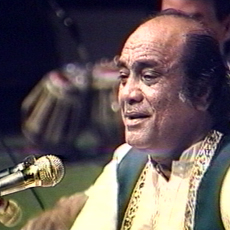
The soul-soothing voice of Ustad Mehdi Hassan was silent since years, but Ghazal was alive in his breath. Like clouds bid farewell after a season, leaving a rejuvenating   impact for the rest of the year; the era of Ghazal Mehdi Hassan reigned kept enlivening the most delicate petal of the sensitive heart even after he left singing long back.
Today, the breath of Ghazal has stopped. The clouds have gone for ever. The ultimate drought has begun. The last mighty pillar of the platinum age of Ghazal has collapsed. The voice that walked with Ghazal through her journey from Daagh to Faraz; and from Mir to Shehzad ascended to the Almighty, from where the voice was sent to redefine the Ghazal.
The Ghazal is all about pain. And while walking with him throughout his lifetime, she dedicatedly kept Mehdi Hassan immersed in the pain. She took him to the highest of acceptance, and to the lowest of neglect.
At once, a boy doing ‘Mausiki’ in his wealthy ancestral house was made to wander homeless on Karachi streets. After taking many pains, Ghazal gave him an opportunity to regain his paradise. With Ghazal, he walked ahead, and with Ghazal, he arose to become the King of the same dominion.
But at once, the King was thrown behind a curtain of negligence; that too, in such a way that he would have died unnoticed someday. Mehdi Hassan kept walking with Ghazal even in these days.  He was destined to do so. After all, Ghazal was his breath. The new age Ghazal tried to save this voice -- the joiner of the ancient and the modern age, but it was too late.
Ghazal gone so engrossed in keeping him immersed in pains, that she forget to give Mehdi Hassan an opportunity to express this pain. Unfortunate was the Ghazal that Mehdi Hassan had to go silent for more than two decades of his lifetime. Otherwise, the man who successfully redefined the Ghazal would have been embellished her with countless of wonderful wonders.
The King inspired a good music, good literature, and good poetry throughout his active career. At one point of time, he strongly opposed the unnecessary simplification of the Urdu language aimed to attract the crowds. He selected classic verses and sung them in such a way that even a non-Urdu listener could get the flavor to its fullest. It was his mastery and power of expression that many complex verses full of Arabic and Farsi words became songs of day-to-day life.
Yes. Ghazal will now pay for being so cruel beloved to a person who remained to be her soulful lover for his lifetime. With Mehdi Hassan, Ghazal loses an age to History. She loses her traditional beauty to the modern make-up. The Ghazal loses the last exponent of the class of which the Ghazal is known for.

Sunday, June 10, 2012

A song of Love...

It was really a touchy moment. Earlier, the tiny girl was upset, as the CD she brought from home was not working. One after another, her friends gave their dance performances, and even collected cash rewards from the organizers.
Innocent, she was waiting.
No. She was not at all crying. But for sure, she was upset. Sitting in the front row, she was waiting for something.
A handsome man who was hosting the show, made personal request to the orchestra to play the song on which the girl was about to dance. She came back on stage. But to her disappointment, the orchestra musicians were unaware of the song she asked them to play. “Well, Beta, we don’t know this song. We will play some other song for you,” the guitarist proposed. “No!,” she shook head. “Hey, let them play some other song. Don’t you want to dance?,” the host asked her. “Nah!” the girl denied. Then, the musicians asked her to sing a few lines of the song, but she was too small to explain them. Finally, they decided to send her back.
“Wait. I will sing a few lines of the song. Let her dance,” a woman from the audience came forward, slowly. Yes, slowly, because she was not well. Unable to go upstairs and accompany the girl on stage, she preferred to stand within the audience. The host handed over microphone to her.
The woman started singing. Talented musicians picked up the rhythm and music began. The girl started dancing. One, two, three, four, and five – the woman went on singing for the girl, and the host went on watching both of them, standstill. The girl really rocked the stage. Song ended. Audience gave spontaneous applause.
The girl was about to leave the stage, when the host, with his eyes full of tears, lifted her spontaneously up and hugged her tight. He came down the stage with the small girl to the woman, who was waiting for them in the audience. “Mummy! My dance was good na?!,” the girl exclaimed, and the ailing woman got the energy from somewhere to lift her and kiss her forehead.
The host, who was still in tears, took some moments to settle down and then announced that the girl was his daughter. “My wife is suffering from arthritis; otherwise, I would have asked her to sing a song in today’s function. She is trained singer. But, somehow, by God’s grace, or due to the faulty CD, I got the best gift. My daughter’s dance performance along with my wife’s song,” he was willing to speak much more, but couldn’t. “Thank you! Thank You! And Thank you all,” he addressed the two beautiful women in his life and lastly to the audiences.
Musicians started playing ‘Ek Pyar Ka Naghma Hai…Maujon Ki Ravani Hai; Zindagi Aur Kuchh Bhi Nahin, Teri Meri Kahani Hai…”

Saturday, April 14, 2012

Growing up, being stone

I don’t cry. I control myself. I accept life as it comes. I do this and I do that. I am matured. Uttering all this means nothing but I am fooling myself.
Days, weeks, and months passed. Years will, too. Now I am more focused, they say, and I believe. Nowadays, I think more about my career. If I will work hard in office, and score good marks in university; I will get better opportunities. If I will get better opportunities, I will get better money. Better money means better life. Better life gives better life partner. And chain goes on. Nowadays, I think about this chain quite seriously. So, now I am a matured guy for them; and I believe.
Nowadays, I don’t get words easily. I have to search them for long. I have to write twice and thrice, still delete, and rewrite. Because I want to be technically correct. There must not be any mistake of grammar, diction or vocabulary in my text. Yes, now I call it ‘text’ or ‘content’. Because I don’t write my heart; I write my mind. But, they like my writing now. They feel it’s better than what I used to write earlier. Because it’s more correct, to the point, and matured, they say. I believe.
And nowadays, I receive text messages as forwards and many times delete them without reading. If sometimes, I forward them to some contacts, I don’t wait for any reply to come. I don’t feel bad at all if nobody replies. I take it very easy these days if someone reaches late, or even cancels appointment. Even I don’t bother much to cancel appointments giving reason that I was busy with some other work. I don’t remember I have ridden right from west point to east point of the city just to return a book or a paper to somebody in last so many days. I just don’t do such foolish things now. After all, I am matured, that’s what I believe.
I don’t write poems. They just don’t come to me now. No Ghazal brings tears to my eyes now. When I listen to them, I recall next verses aptly, and feel proud that I remember the great words of great poets. Sometimes, I sing along, making sure that nobody is listening, because if someone points out my mistake; I may lose my impression. Now, I read books helpful for my writing -topic or for my study purpose. I find reading a comics or fairy tale books utter nonsense. How can I spend my valuable time in roaming around the city for no reason, or say, to enjoy the evening breeze? How foolish it is for me now to reach somewhere say an hour earlier and wait for someone in scorching heat just to ensure that that person should not have to wait.
This is what being matured is. Spontaneous reactions start appearing foolish. Crying for something means a sign of weakness. Investment without outcome becomes useless. And moments once used to make your heart heavy become matter of casual discussions.